


I met Ashley for the first time in March 2015 at a Noodles & Company in Indianapolis. Her adoptive father Craig Peterson had arranged the meeting. He initially reached out to me about an article I'd written, then shared bits of Ashley's story.
I met Ashley for the first time in March 2015 at a Noodles & Company in Indianapolis. Her adoptive father Craig Peterson had arranged the meeting. He initially reached out to me about an article I'd written, then shared bits of Ashley's story.

Ashley stepped out of Sandy’s red-and-white van. The 10-year-old didn’t say a word, didn’t glance back at Sandy, her adoptive mother. And she refused to meet the hazel eyes of the man waiting in front of her.

Butch and Sandy Kimmerling wasted no time. Soon after child welfare officials voted to allow a gay man to adopt the foster child who had been living in the Kimmerlings’ home for five years, Butch and Sandy contacted their pastor.

Ashley would be exploited, abused and, ultimately, abandoned by people who said they cared about her. And her invisible wounds would persist for decades.

Author and physician Sunita Puri talks to journalist Fran Smith about why journalists should be telling these stories — and how they can do so in a more thoughtful way.

This story is part of a series called In Recovery, about opioid addiction and treatment in the San Joaquin Valley.

"I was the only person willing to protect me." Ashley Peterson on surviving abuse, being shamed for speaking up, and why there should be no statute of limitations.
The United Company Foundation issued a $1 million challenge grant to Edward Via College of Osteopathic Medicine in Blacksburg to be used to help lower medical school debt for doctors who agree to practice in Southwest Virginia.

The data showed that drug and behavioral health treatments are among the greatest needs in the community with the least available services in the Coachella Valley.
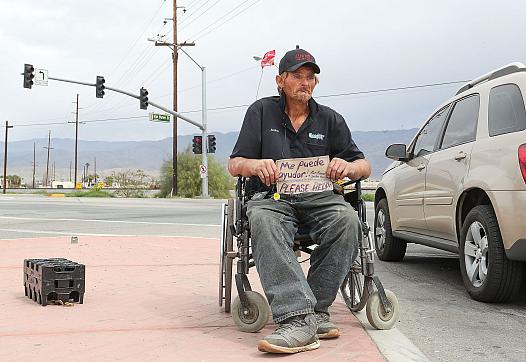
The Desert Sun surveyed 200 people experiencing homelessness in the Coachella Valley about health needs and access to health care.