

The safety net is fraying, but this LA health system is trying to hold it together

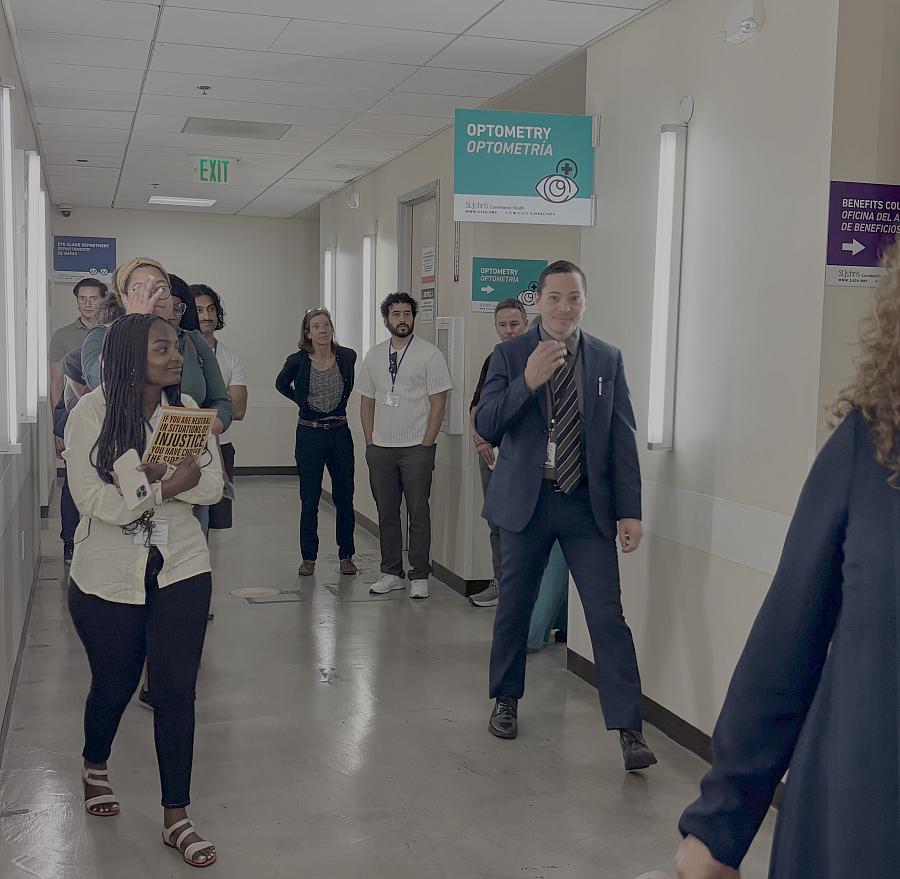
Journalists tour a clinic at St. John's Community Helath in LA while taking part in the Center for Health Journalism's 2026 California Health Equity Fellowship.
(Photo by CHJ Staff)
Last year, Jessica Sanchez was running a street medicine clinic on the corner of Alpine and Main streets near downtown Los Angeles when Immigration and Customs Enforcement agents arrived.
With their guns pointed at her and the team assembled there to provide health care, the agents told the care team to “Get the ‘F’ out of here,” Sanchez said. The moment brought home for her how the ongoing immigration raids could endanger both her team and the community they serve every day.
Sanchez works as the director of street medicine for St. John’s Community Health, an LA-based network of community health centers on the frontlines of an impending health crisis. They deploy mobile clinics across the city that respond to the health needs of the local unhoused population, and they also operate on-site clinics – 30 scattered across Los Angeles and San Bernardino counties – that provide care to Angelenos regardless of immigration or insurance status.
Sanchez shared her story with a room full of journalists who were at St. John’s in South Los Angeles to learn about the growing challenge of providing services while taking part in the USC’s Center for Health Journalism 2026 California Health Equity Fellowship.
As Sanchez’s story suggests, St. John’s has been forced to confront the impact of ICE enforcement on their patients. Since raids erupted across the city last summer, many of St. John’s patients have been afraid to leave the house.
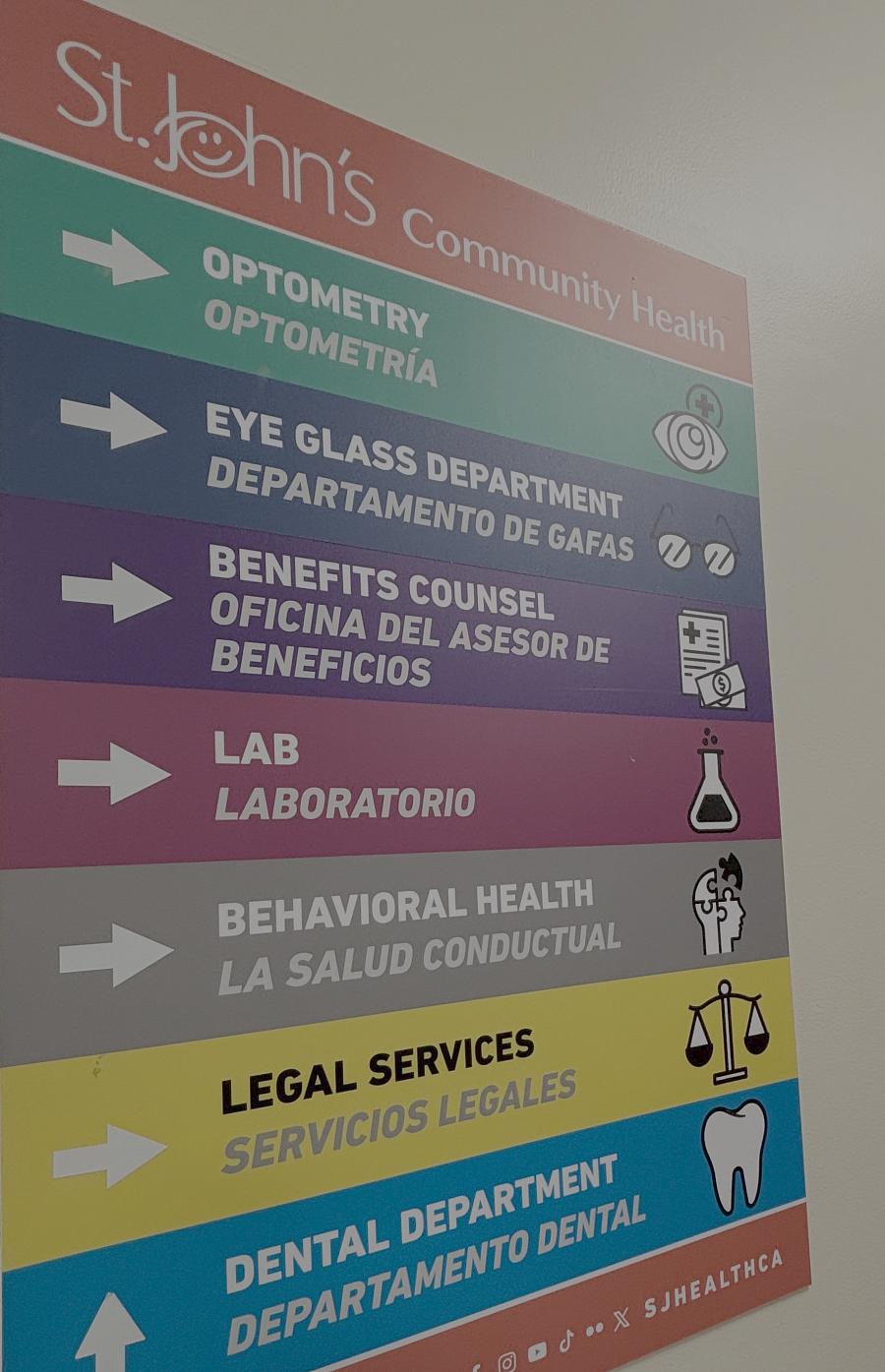
A sign shows some of the sevices offered by the safety net health system.
Over the last year, St. John’s has rolled out a slew of programs to help undocumented immigrants access care. They launched “Healthcare Without Fear,” a home health visitation program that provides care to undocumented patients in their homes. And twice per week, St. John’s legal team opens a legal clinic to answer patients' questions, which are increasingly related to immigration and status.
It’s not just ICE raids deterring people from seeking care. On January 1 of this year, California froze enrollment in Medi-Cal, California’s Medicaid program, for undocumented immigrants. Starting July 2027, non-citizens who are still insured will be required to pay $30-a-month premium to maintain their coverage. The change could lead to 522,000 people losing coverage over the next year, according to analysts in California Gov. Gavin Newsom’s office.
Jim Mangia, St. John’s CEO and president, called the changes and the broader federal Medicaid cuts a "devastating and existential health crisis.”
“This is probably the worst time ever that I’ve been working in public health clinics,” he said.
The GOP megabill that passed last year will cut nearly $1 trillion from Medicaid over the next 10 years. And additional state cuts will further impact their budget. In total, Mangia said St. John’s stands to lose around $80 million in funding.
In response, St. John’s is backing a Los Angeles County ballot measure that would raise the county sales tax by a half-cent to help replace lost health care funding. Supporters say the measure could generate about $1 billion a year to shore up the county’s safety net, including community clinics.
The half-cent tax, introduced in the Essential Services Restoration Act, would also provide money for safety-net hospitals and nonprofit reproductive health providers such as Planned Parenthood affiliates.
It could also help keep St. John’s operations up and running, including the Avalon drop in site, where unhoused individuals can launder their clothes, take showers, and receive free tents and blankets. The tax would also keep the We Are LA program alive, a network of eight patient navigators who screen people for housing insecurity and risk of eviction. They make phone calls and meet with people in front of clinics in order to direct them to services.
The communities that St. John’s serves, predominantly Black and Latino people in and around South LA, are reporting higher levels of anxiety and depression, according to St. John’s leaders. As ICE raids continue, these communities have faced massive losses of family, jobs and homes. Some have lost the person in their life who was the primary wage earner.
Starting April 1, the legal team at St. John’s will begin offering “Family Preparedness Trainings.” St. John’s will teach families that in the event that the breadwinner of a family is swept up in an ICE raid, or taken off the street, they can continue to pay their bills using power of attorney, an authorization that allows an individual to act on someone else’s behalf.
The federal cuts have already dealt initial blows to the local health care safety net: LA County shuttered seven health clinics earlier this year, due to “significant funding cuts.” Without the money they receive from Medicaid currently, St. John’s will be forced to do more with far less, said Darryn Harris, chief government affairs and community relations officer at St. John’s.
As more people lose their health care as a result of federal and state cuts to Medicaid, and fewer community health clinics operate, emergency rooms will once again be destinations of last resort for medical care. Meanwhile, public emergency rooms are facing their own funding crises.
“The bad reality is that people are going to die, and we can prevent it if we want to,” Harris said.