

How Saru Sivanesan Overcame Intergenerational Trauma to Find Healing as an Adult
The story was produced in collaboration with India Currents as part of the 2026 Ethnic Media Collaborative.

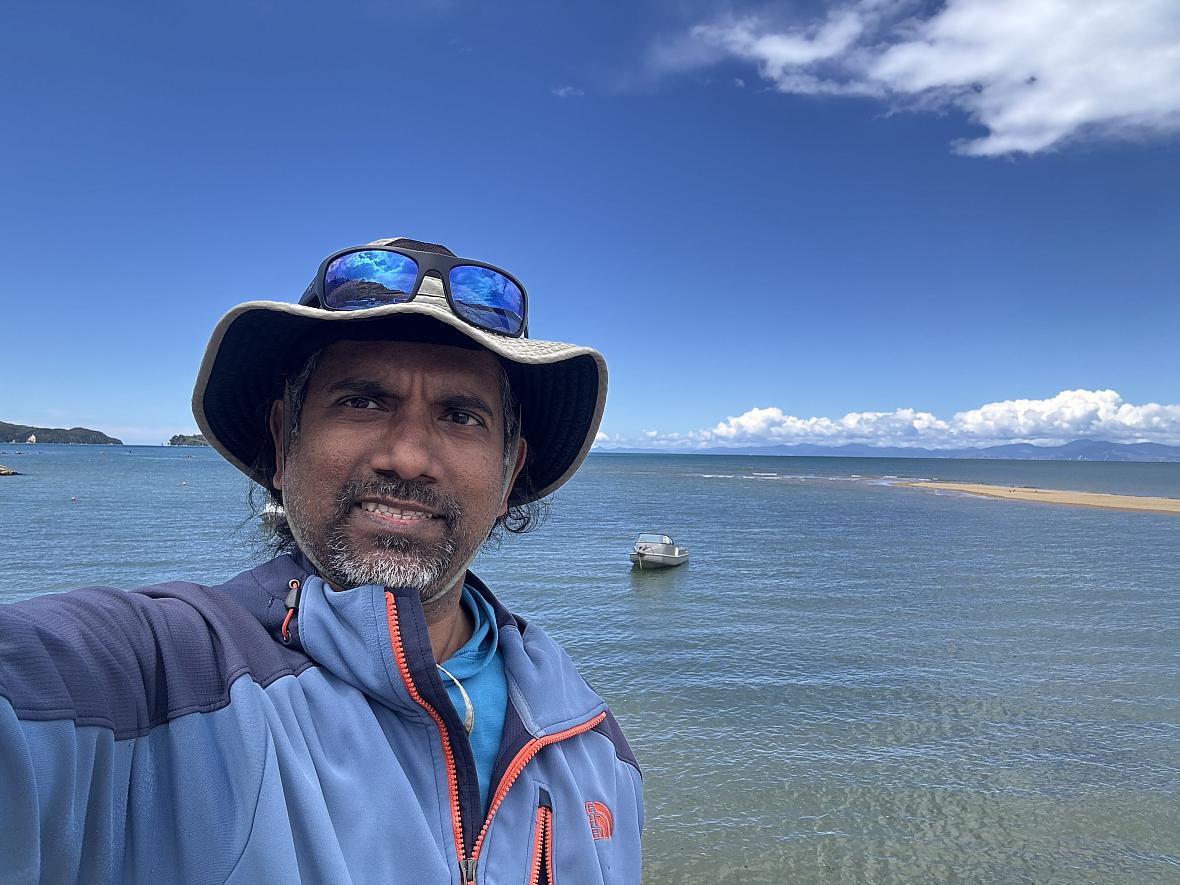
Saru on a hiking and kayaking trip at Abel Tasman Park, Nelson, New Zealand.
Courtesy of Saru
A Cycle of Trauma
Saru Sivanesan remembers a violent altercation between his parents when he was nearly two years old. In the middle of the argument, his father threw Saru and his mother out of their home, telling them to get out of his house.
Much later, after years of therapy and becoming a psychotherapist himself, Saru realized that the fight was part of a much deeper cycle of inherited trauma that had shaped both sides of his family long before he was born.
The trauma Saru was living through was not caused by one isolated event, but by a pattern of instability, conflict, and emotional dysfunction passed down through generations, exacerbated by stigmas and taboos in South Asian society, where saving the family reputation was more important than individual needs.
As a child, however, Saru could not fully understand what was happening. The conflicts between his parents were both simple and complicated, involving disputes over dowry and interference from extended family, creating a perfect storm when the world outside his home grew dangerous as a civil war ravaged his Sri Lankan Tamil community.
Starting in 1983, the Liberation Tigers of Tamil Eelam (LTTE) began intermittent attacks against the predominantly Sinhalese Sri Lankan government in response to ongoing discrimination and persecution of Sri Lankan Tamils. Sinhalese mobs, often with state support, carried out violent attacks against Tamil civilians.
Between his parents’ volatility and the conflict outside, Saru’s nervous system became conditioned by fear in a near-constant “fight or flight” state. He was always waiting for something to go wrong.
The Burden of South Asian Norms
“I grew up in a Sri Lankan Tamil household,” Saru says, in a culture deeply influenced by religion, patriarchy, social status, and family expectations. Typically, in these traditional households, the elders wielded considerable influence over all aspects of family life — their life choices, identity, and emotional well-being.
Growing up in a conservative household influenced his mother’s struggle for identity and validation, which she carried into her marriage and parenting. Similarly, his father also came from a background shaped by strictness and emotional rigidity; they both suffered their own trauma, though unspoken and unacknowledged.
His parents separated when his father asked his mother to leave the house. Saru and his mother then moved in with his maternal grandaunt. But occasional visits back to his father’s home remained chaotic and frightening as interactions between his parents often resulted in violent outbursts.
The extended family did not offer enough protection. They were respected elders in their religious community, and preserving the family’s reputation mattered more than confronting the abuse. Above all else, relatives pushed for reconciliation.
“Society is not kind in situations like this,” Saru says.
Trauma specialist and licensed clinical psychologist Shilpa Kapoor, Psy.D, explains that in many extended South Asian families, cultural expectations often override individual well-being. “Marriage is forever, good or bad; this is your fate,” she says, a belief that can make it difficult to acknowledge harm within relationships.
If a young woman spoke about emotional or physical abuse in her marriage, says Dr. Kapoor, she was often told that suffering was simply a part of married life. As a result, her fear and pain were normalized instead of being recognized as trauma. Men are expected to appear “strong,” making it difficult to admit pain when they lack the language to describe it.
Chronic Conflict
As a child full of energy, Saru would return from school, eat lunch, and play around the house. He was punished if he did not quieten down and go to sleep as he was told to. This affected his sleep patterns much later in life, which, ultimately, he was able to resolve with therapy.
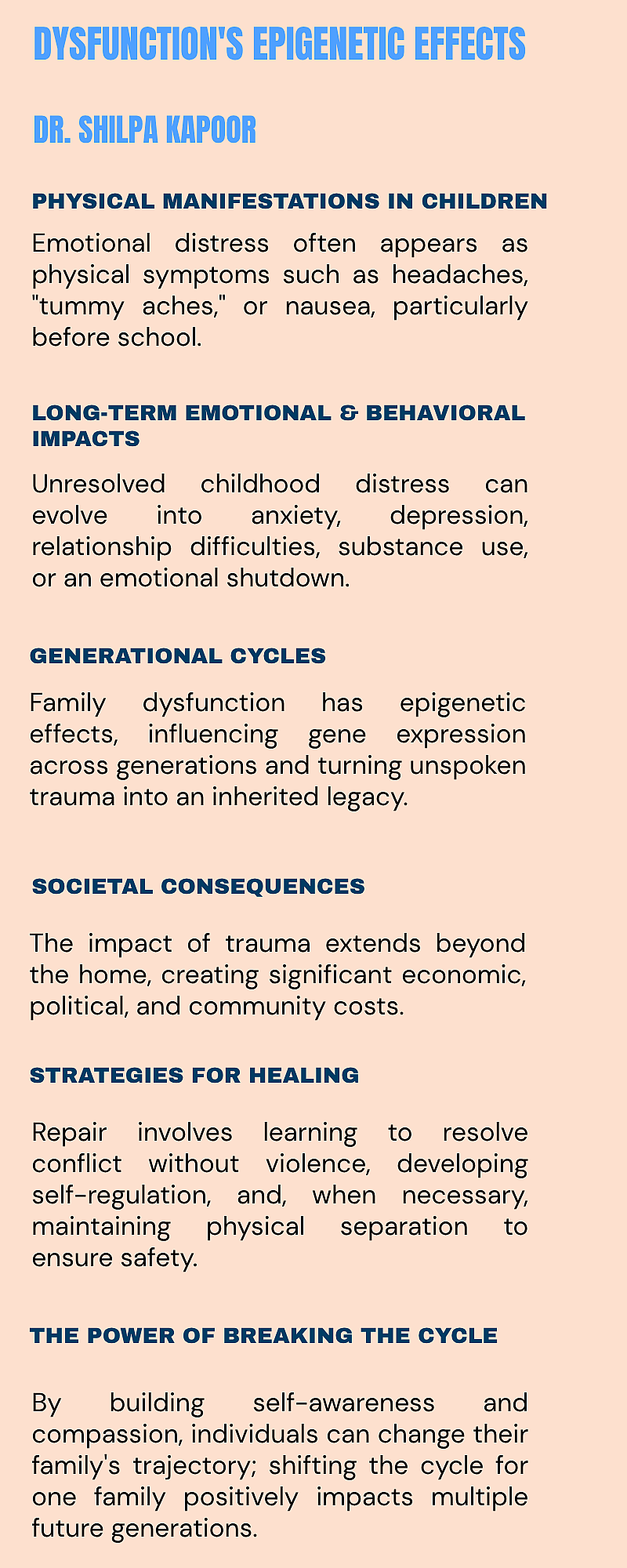
Dr. Kapoor explains that children exposed to chronic conflict often show distress in four ways: behavioral, physical, cognitive, and emotional. “Boys tend to act out more,” she says, while girls are more likely to “shut down,” shaped partly by social expectations about how each gender is supposed to behave.
Saru says there was “love, but no safety” in his childhood home. Love appeared through meals and moments of comfort amidst the chaos.
One memory eventually helped him put words to his fear. At his grandaunt’s house, a snake lived coiled in the rafters of the tiled roof. One of his caregivers would threaten him with it, terrifying him so badly that he ran away from home. A neighbor brought him back and simply said, “He’s gotten really scared.”
“That was the first time I had a word for my experience,” Saru recalls.
When Saru was five, his parents reconciled and moved back in together. A few years later, his father left for the Middle East to work, returning only once a year. Saru says the physical distance helped keep peace inside the family home.
But the emotional toll had already taken root. What stayed with Saru most was not only the physical punishment, which he says was common in that place and time, but the “uncontrolled anger” surrounding it. That constant exposure to fear between the ages of two and five became one of the most psychologically destabilizing parts of his childhood.
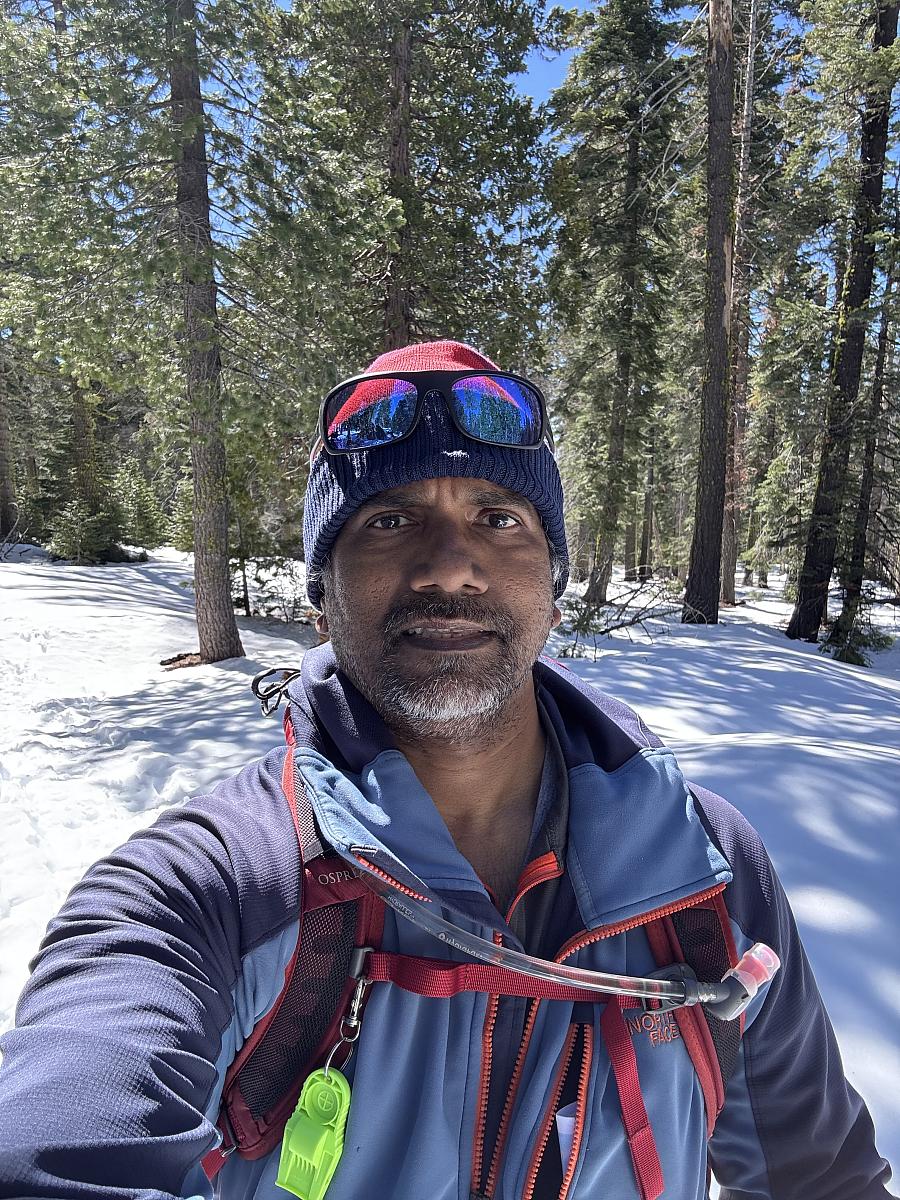
Saru snowshoeing in Dodge Ridge, California
Courtesy of Saru
Dr. Kapoor explains that the effects of dysfunctional childhoods often emerge later as anxiety, depression, emotional triggers, distrust, and difficulty regulating emotions as adults. Even when children are not directly exposed to violence, they can still absorb trauma through emotionally overwhelmed or unavailable parents.
“The myth is that children do better in a household where parents are together, no matter the quality of the relationship between the parents,” says Dr. Kapoor. “The reality is children do better in a household where the conflicts are resolved amicably and without violence.”
Today, Saru speaks with sadness about “that little kid inside me” who lived in constant fear. As a trained therapist himself, he now understands much of what he carried as intergenerational trauma.
The Civil War
While Saru’s family life was unstable, outside his home, Sri Lanka itself was becoming increasingly precarious. In the early 1980s, growing ethnic tensions and violence from the civil war began entering everyday life. Saru was around four years old when a Molotov cocktail struck his home and burned the front door. During the 1983 riots, his Tamil family hid inside Sinhalese neighbors’ homes for protection, eventually fleeing Colombo for their safety.
When Saru asked whether the army would protect them, his aunt answered:
“No, da… they are the ones who threw the petrol on all the houses and burned them.”
For Saru, it was a defining moment. “I’m not safe in this country.”
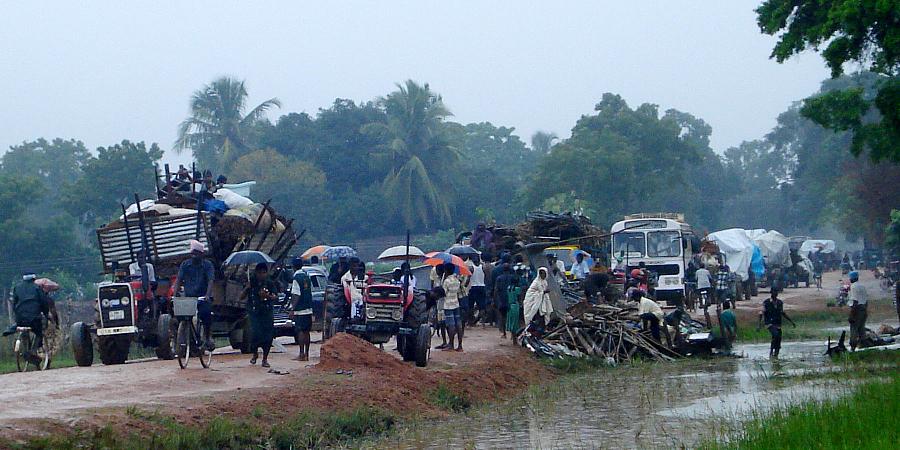
This photo depicts the displacement of Tamil civilians in the Vanni region of Sri Lanka during the final stages of the civil war in January 2009.
Wikipedia
After the war had temporarily calmed, the family returned to Colombo.
Saru excelled academically, especially in mathematics, but achievement came with constant pressure. Anything less than a perfect score was not acceptable.
The pressure left him feeling as though he was always walking on eggshells. His discipline was driven more by fear than confidence. His self-worth also became tied to comparison and public image. Success became connected not to his own sense of value, but to family expectations.
Teenage Trauma
After high school, Saru moved to Canada to study computer science at university. But the unresolved trauma of his childhood followed him into adulthood.
At university, Saru says, “all the repressed emotions from all the traumatic experiences started coming up.” By his late teens, he struggled with concentration. Feeling disconnected and emotionally adrift, he began drinking.
Dr. Kapoor explains that when children grow up focused on survival, their attention is diverted from learning and emotional development. Over time, this can lead to anxiety, depression, relationship difficulties, substance use, emotional shutdown, or repeating cycles of violence.
Looking back, Saru says, though he completed his degree, he was “dysthymically depressed.”
When he once confided in a roommate that he felt depressed and needed help, the response was dismissive:
“Just go back to studying; there’s no such thing.”
The reaction left him feeling unseen and unsupported. Saru now wonders whether earlier support might have helped him build “better foundations” for himself.
Eventually, the consequences of drinking forced a moment of reckoning, and Saru remembers thinking, “This is just not me.” The experience became a turning point. Realizing he could no longer continue living that way, he stopped drinking “cold turkey.”
That decision marked the beginning of a much deeper search for healing.
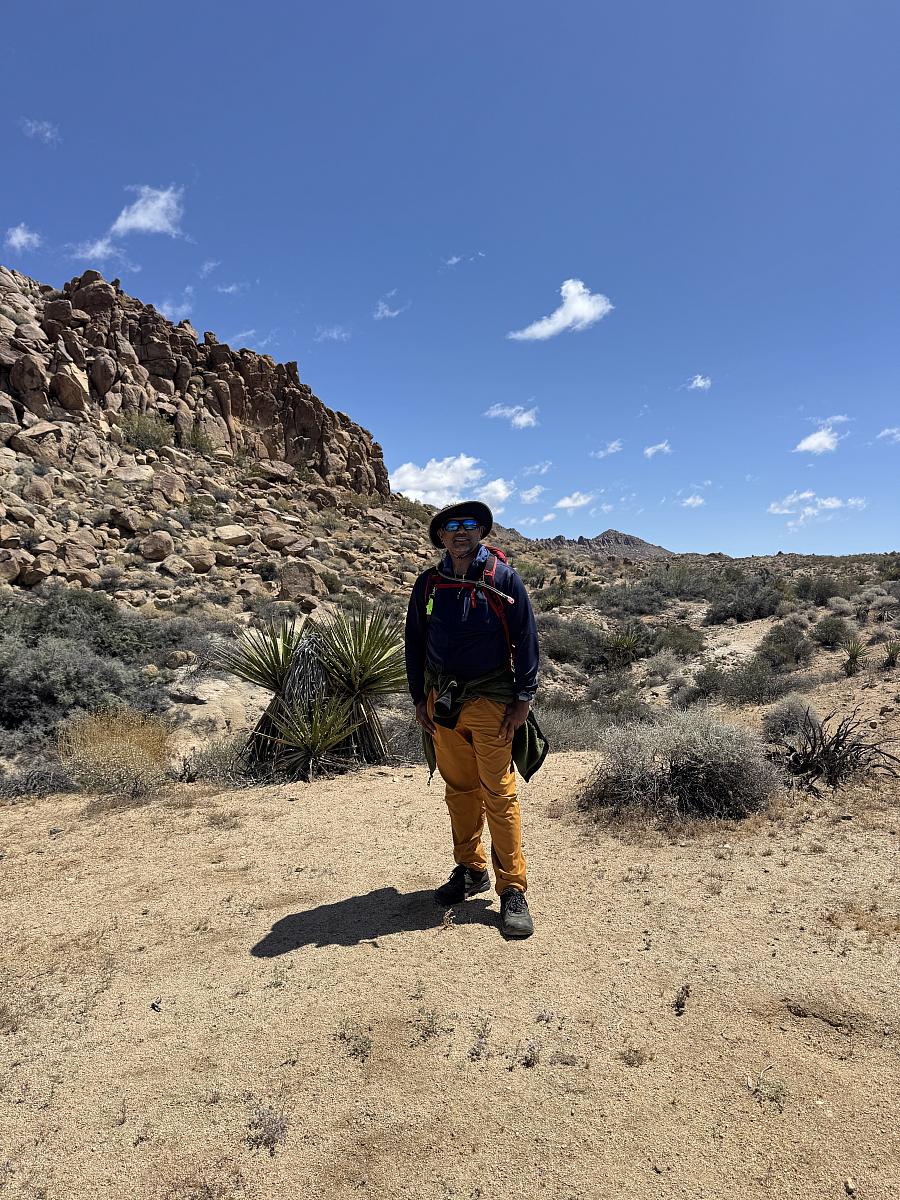
Saru on a hike at Joshua Tree National Park.
Courtesy of Saru
The Path to Healing
Family therapist Sanjeev Balarajan explains that early childhood experiences often remain active beneath the surface of adult life. Current situations can trigger old survival responses, making reactions feel automatic or overwhelming. Understanding this “intergenerational transmission,” he says, is often the first step toward healing.
But healing also requires recognizing personal agency.
“You have agency now,” Balarajan explains. Even if someone emotionally feels like a “five-year-old hearing ‘you can’t do this,’” they are no longer trapped in that original environment. The body may still react as if danger is present, but change becomes possible by understanding those old survival patterns and choosing new responses despite the discomfort they bring.
For Saru, spirituality became one path toward healing. At seventeen, he met a swami whose calm presence deeply moved him.
“I want that,” he remembers thinking when he saw “the peacefulness in his eyes.”
He began practicing yoga, reading spiritual texts such as Autobiography of a Yogi, and was initiated into Kriya Yoga in 1998. These small but meaningful steps gradually led him away from survival mode and toward self-awareness.
In 2002, Saru left a tech job in California’s Bay Area to spend time at an ashram connected to an Indian guru called Amma. In 2007, he embarked on what he describes as a “soul-searching trip” to Machu Picchu during which he began to consider a career move from technology into counseling.
When Saru walked into the Institute of Transpersonal Psychology, now Sofia University, he says he immediately felt:
“This is home for now.”
After earning a master’s degree in counseling psychology, Saru began working as a therapist himself. He credits years of therapy between 2008 and 2012 with helping him process old trauma and rebuild healthier relationship patterns.
In 2022, he added acupuncture to his healing process, believing that “talk therapy only goes so far” when dealing with early childhood trauma stored deeply in the body.
Healing also brought him toward forgiveness, leading to understanding and reconciliation with both his parents.
Later, during his healing journey, a family member revealed that his father had deeply cared for him. Over time, he came to see that his father’s inability to express love did not mean love was absent, a realization that softened years of resentment and paved the way to a reconnection.
After both of his parents passed away, Saru says they appeared in his dreams, bringing a sense of peace and emotional closure, as though something unresolved had finally settled.
“At the end of the day, I know they tried their best.”
Building Hope
Hope lies in the growing belief that inherited trauma does not have to become destiny. As awareness builds, community organizations are stepping in to provide safe spaces and support. In 2022, the Bhatia Family Foundation committed $3 million to Sakhi to launch the South Asian Safe Families Initiative that recognizes ending violence requires helping both individual survivors and entire families heal.
Breaking cycles of intergenerational trauma also starts with breaking silence. In the Bay Area, Rcoz is encouraging families to talk openly about mental health, one difficult conversation at a time.
Even today, he continues his therapy occasionally, describing healing as “a long-drawn work… I’ve been working on it for the last 10 years.”