

![[Photo: Spencer Platt/Getty Images]](/sites/default/files/styles/teaser_list_thumbnail_large/public/title_images/unnamed_111.jpg?itok=EecHUi_J)
Arizona tends to try out new approaches and programs, but rarely sticks with such efforts long enough to bring about change.
Arizona tends to try out new approaches and programs, but rarely sticks with such efforts long enough to bring about change.

Hurricane Katrina forced New Orleans' remaining gangs into the Central City neighborhood. With this mass concentration of drug traffickers came a bloody turf war, near-daily shootings and a rising body count.

The United States’ health care system came in dead last in a comparison of 11 wealthy countries, done by The Commonwealth Fund.

In Oklahoma, ranked No. 1 for per capita female incarceration, kids were going missing from school because their mothers were locked up in county jail. "This was the most complicated story I’ve ever done," writes 2016 National Fellow Cary Aspinwall.

This article was produced as a project for the USC Center for Health Journalism’s California Fellowship.

Officials at Martin Luther King Jr. Community Hospital in Watts are trying to remedy that situation by focusing on preventative health.
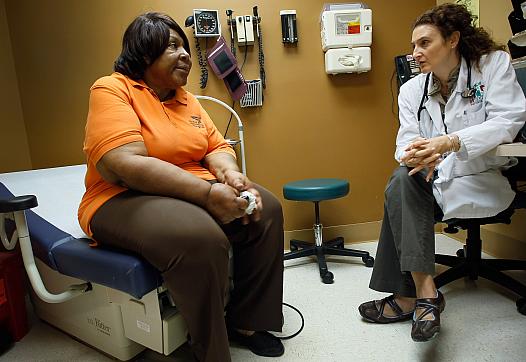
New research finds that just before the ACA took effect, the U.S. had some of the biggest disparities in people’s perceptions of their own health and health care out of 32 countries sampled.

The story is the first in a series about sex education and teen pregnancy in the central San Joaquin Valley, and is produced as a project for the USC Center for Health Journalism’s California Fellowship....
![[Photo by USDA via Flickr.]](/sites/default/files/styles/teaser_list_thumbnail_large/public/title_images/unnamed_99.jpg?itok=V9prb0YC)
After Omar Chavez suffered a back injury at the restaurant where he worked, his family lost its home. They now live in a trailer bought at a junkyard. Such stories of back pain gone wrong are common among immigrant workers.

Graciela Pacheco's teachers never taught her about sex. She learned most of what she knows from her next-door neighbor — a 15-year-old boy she met when she was 12 — who would become the father of her child.