

Building trust proves crucial for reporting on mental health in Sacramento’s Native communities

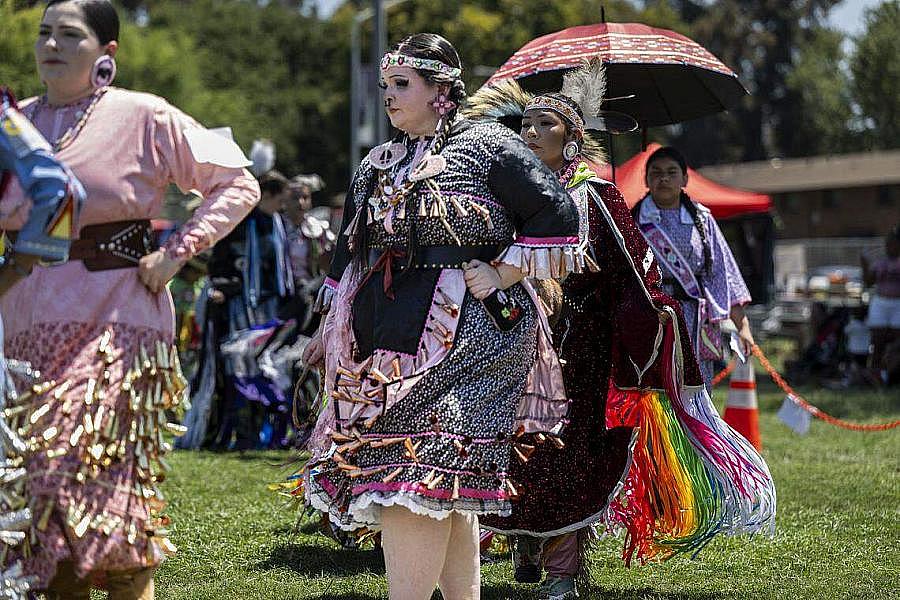
A member of the Ione Band of Miwok Indians takes part in the 30th annual Sacramento Contest Powwow at O'Neil Park in 2025. Participating in cultural practices helps alleviate depression and improves mental health for many people in Native communities, as one reporter learned.
Courtesy photo by Hector Amezcua/Sacramento Bee
Indigenous people often face the brunt of health disparities across California. There’s a complex history behind this. Colonization, intergenerational poverty and the loss of identity have impacted almost every Native household, my sources told me.
One of the most staggering statistics is how suicide affects youth. Despite being California’s smallest among major ethnic groups, Native Americans experience the highest suicide rate in the state. Native youth and young adults, in particular, are vulnerable. For example, in 2022, suicide was the second leading cause of death for American Indians and Alaska Natives ages 10 to 34.
I’ve covered Native communities in Sacramento and Indigenous issues in California for years. And as a Native woman myself (Cherokee/Blackfeet), I know firsthand how suicide and mental illness impact Indigenous communities. But what I didn’t know was the intricacies of this crisis in Sacramento County.
Through my reporting, I learned Sacramento’s Native youth face myriad obstacles that prevent them from getting proper care. From stigma and a lack of cultural competence among therapists to the loss of services due to federal cuts, many youth feel like they have few good options.
After interviewing several youth in the Sacramento region, my reporting increasingly pointed me toward the power of culture. From hand games to powwow dancing, the youth I spoke to said participating in cultural practices alleviated depression and mental health issues. One of my sources even referred to it as an “unspoken therapy.”
My reporting also found that Native youth faced obstacles unique to urban areas, including Sacramento. Youth I interviewed felt isolated and disconnected from their culture while living in the region. Native people are one of the smallest ethnic communities in Sacramento County, making up 1.2% of the population. Taking part in cultural activities was a way for them to be surrounded by community and people who looked like them, they told me.
For my project, I prioritized the voices of young adults. Finding young people who were comfortable telling me their story was a challenge. At the beginning of my project, I relied on community organizers to connect me with youth. I also reached out to young Indigenous advocates who had spoken about mental health publicly before. However, I was usually ghosted or hit roadblocks while connecting with these young adults.
After my sourcing attempts via community organizations fell through, my senior fellow advised me to “flood the zone.” This meant refocusing where I looked for sources and reaching out to as many people as possible. I had to cast a wide reporting net.
I went to multiple community events, including several powwows. Regardless of whether I found sources who ended up in my story, I spoke with multiple organizations and everyday people about my project. There’s power in showing up, and I made a point of doing so.
Instead of relying on community organizations to connect me with a young person, I turned to social media. Young adults are more responsive online, so sending a social media direct message would often result in a faster response than any email or phone call. I went to Instagram, TikTok, and Facebook. From my own experience as a young person, I know my generation checks social media more frequently than traditional communication channels.
With Sacramento State and the University of California, Davis, both located in the Sacramento region, I knew my best bet was to find college students. I also reconnected with sources I met at Sacramento State while I was a college student. I called community leaders, tribal officials, and youth leaders with whom I had already established relationships.
Building trust with my primary sources was paramount. These stories would discuss the darkest moments of my sources’ lives. I spent time building relationships with my sources, meeting them multiple times in person and conducting several phone calls, whether they were interviews or just general check-ins. I even met the parents, friends, and loved ones of my primary sources.
I was always transparent with my sources. They knew when my piece was being edited, when the project would be published, and what information would be included. I conducted sensitive reads with my sources, ensuring that I told their stories thoughtfully and sensitively. Alongside ensuring accuracy in my project, I also kept the well-being of my young sources in mind.
My intentions with my project were clear to my sources: to spread awareness about mental health in Indigenous communities, not to exploit them. To do so, empowering my project’s youth and their stories was key. Whenever reporting on communities of color, even if you are a member of a given community, it’s vital to act with intention. I tried to be understanding, patient, and aware of the cultural dynamics.
Throughout the reporting process, I reminded myself I was still a stranger to them; trust was not guaranteed. Granted, being Indigenous did help. I believe it made me more approachable because I empathized with my sources. For them, it was easier to speak to an Indigenous reporter in a ribbon skirt at a powwow, rather than someone who was an outsider, unaware of the culture or proper etiquette.
But I also knew there are generations of distrust from Native communities toward journalists, even if the journalists come from Native-owned outlets. That distrust often stems from stereotypical depictions of Indigenous communities, incomplete coverage of complex issues, and little to no representation in the news. Trust was something I had to work on and build. It wasn’t guaranteed, even if I am also Indigenous.
Throughout my project, I repeatedly heard the phrase: “Culture is medicine.” While proper access to health care is crucial in treating mental illnesses and suicide, I learned that there’s a great, almost indescribable power in cultural practices. For Native people, who have had so much taken from us, culture was something we’ve been able to reclaim. My sources taught me that it’s also something that could heal.