

Health Care Nightmare Nearly Cost A Sacramento Artist Her Life
The story was originally published in The Observer with support from our 2026 California Health Equity Fellowship.

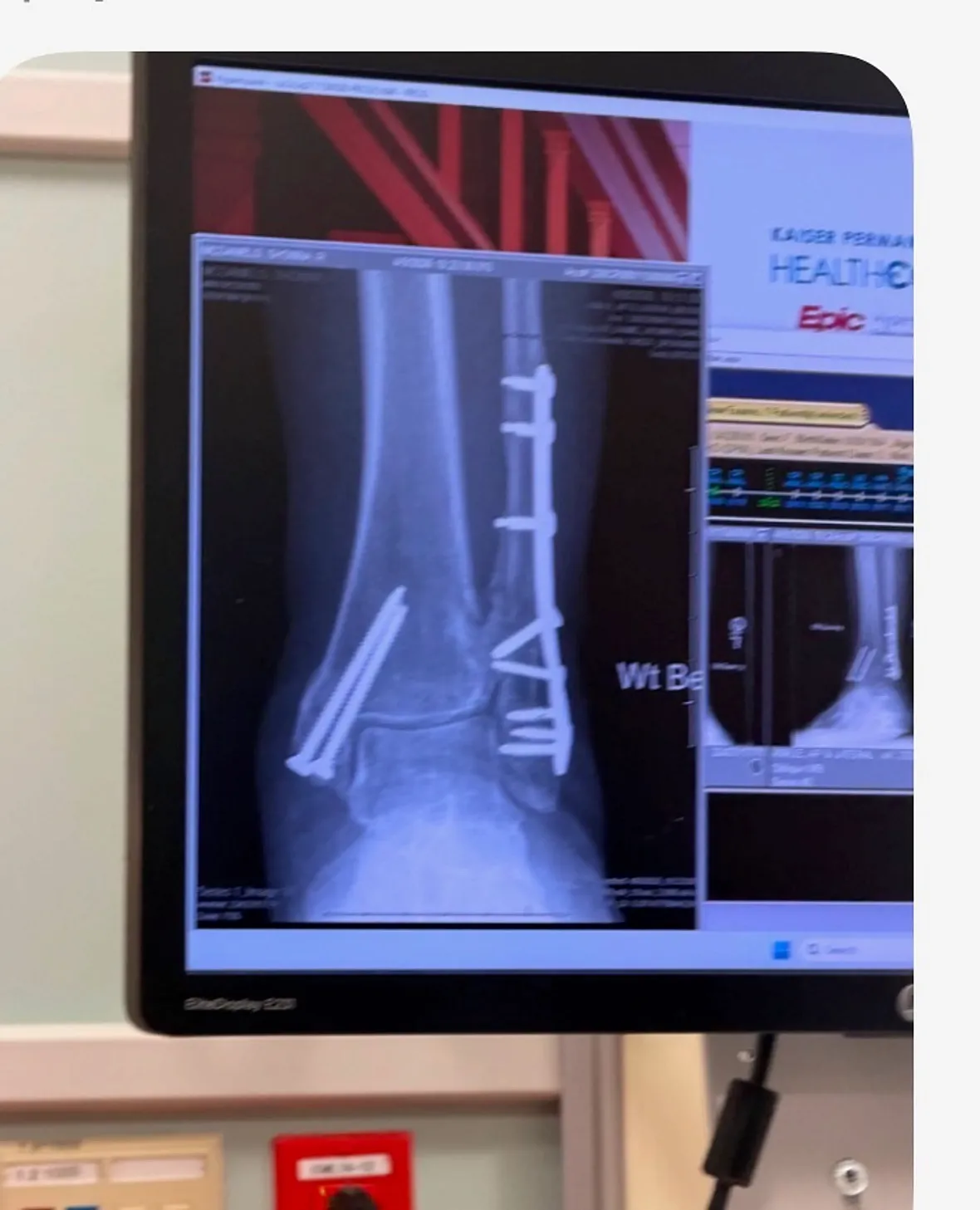
An xray of Shonna McDaniels' injured foot.
Photo Courtesy of Shonna McDaniels
Shonna McDaniels’ 2020 experience in the emergency room was the embodiment of the term “adding insult to injury.”
McDaniels, a local artist and founder of the Sojourner Truth African Heritage Museum, broke her foot in October 2020 after falling from a ladder while creating a Midtown mural, “A Seat at the Table,” as part of the Wide Open Walls project.
The initial injury turned into others and she spent months in bed. She developed life-threatening blood clots from being prone for an extended period. As she continued to heal, McDaniels navigated the museum and directed new art installations from a wheelchair or a motorized scooter that was donated by a community member.
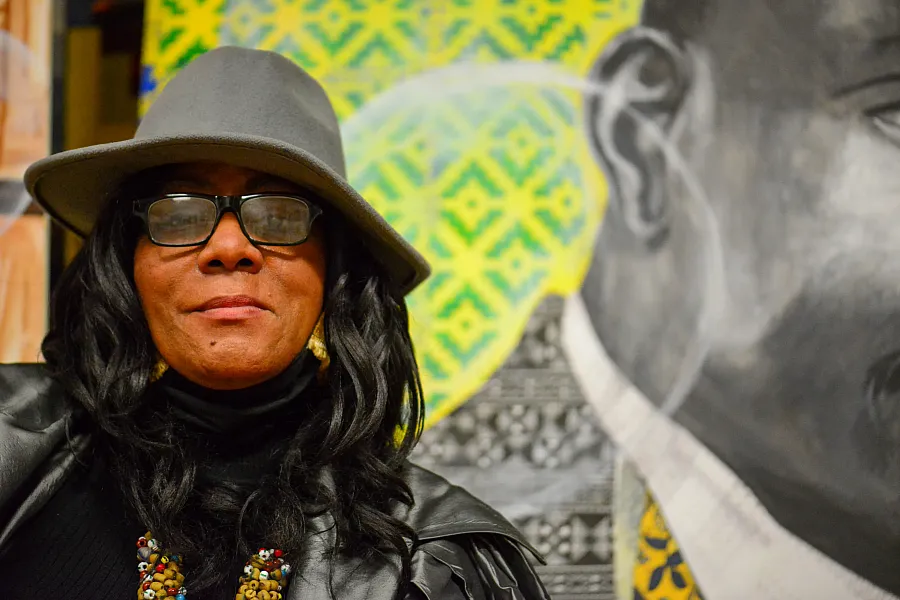
Saturday December 10, 2022 Shonna McDaniels
Verbal Adam
After falling, McDaniels, then 56, was transported to Kaiser South Sacramento.
“I laid on the ambulance bed for one hour against a back wall in the ER space,” she shares with The OBSERVER. “I became cold and asked a Black nurse five times for a blanket. I never received it.”
McDaniels eventually needed to use the restroom. Unable to walk on her own, she recalls repeatedly telling the same nurse that she needed to relieve herself and needed assistance.
“Help never came,” McDaniels says. “One hour later when they came to get me for surgery, I was … wet.”
She says she went through the surgery still in her soiled clothing and didn’t get to change until she was released from the hospital later that night. Her family cut her pants off, threw them in the garbage and helped her clean up.
“The situation was very dehumanizing,” says McDaniels, now 62. “I’ve never urinated on myself in my adult years and all I could think about was getting some help, but the help never came.”
A Dehumanizing Experience
Emergency departments often place patients in hallways due to “boarding” — a bottleneck where admitted patients wait in the ER because hospital beds are unavailable. During incoming emergencies, these hallways are converted into makeshift treatment zones. ERs were exceptionally busy in October 2020; even four months after COVID-19 restrictions were lifted, beds remained a hot commodity. McDaniels’ experience was directly compounded by this broader crisis in emergency medicine.
That experience in the ER, she says, was only the beginning of a larger nightmare. Due to the hospital’s neglect, she says, she almost died.
The humiliation of that moment — of being stripped of her dignity in a place meant for healing — is something she still carries today. She shares her story now to hold the system accountable, hoping to ensure that no other patient is left to suffer in silence, invisible and ignored in their moment of greatest need.
For her resilience and commitment to the community, The OBSERVER named McDaniels its 2022 Person of the Year, recognizing her advocacy for Black artists in public art spaces despite her own physical challenges.
Feeling Neglected
After the initial ER incident, McDaniels’ recovery became a brutal, protracted ordeal. She recalls the severity of the injury vividly.
“When I fell off the ladder, my foot was flipped over to the other side, and the pole pulled out of my foot,” she says. Bones were bulging through the skin, leading to a total foot reconstruction. Post-surgery, she faced excruciating pain — far worse, she says, than giving birth — and felt abandoned by the medical team.
“They wouldn’t give me more pain pills because they said people get addicted to it,” she says. “I’ve never in my life experienced pain like the pain I experienced.”
Left with limited medication, she was forced to “fight through, struggle through all that pain,” while navigating the fallout of her reconstruction.
Confined to her bed for six months, McDaniels says she followed every instruction she was given.
“The doctor kept telling me to elevate my foot … and that’s what I did," she says.
Despite strictly adhering to that regimen to prevent blood clots, she developed a life-threatening pulmonary embolism. It was only afterward that she learned the hospital had neglected to send the physical therapy services she required.
“I didn’t know that, so I couldn’t advocate for myself,” she says.
When doctors later inquired about her progress, the oversight became clear.
“The doctors were coming up to my room and asking, ‘How has your physical therapy been?’ I’m like, ‘What physical therapy?’” she says. “They were all looking at each other because they knew they messed up.”
Reflecting on surviving the embolism, she remains steadfast: “The doctors told me I was lucky, but we don’t deal with luck. God gave me grace.”
Seeking Accountability
McDaniels wasn’t satisfied with a simple apology and sought an attorney’s advice. According to her, she was told that holding a major hospital accountable or seeking compensation for a case like hers would be a significant challenge. She still has a metal plate and screws in her foot, an ongoing physical reminder of a medical ordeal that has left her feeling entirely “screwed” by the system.
Despite being told that “everything’s fine,” McDaniels still experiences ongoing pain and swelling in her foot. A June surgery was canceled because her blood sugar levels were too high. She is concerned about her doctor’s plan to remove the plates and screws, as it conflicts with advice she received that suggests removing only the screws to avoid potential complications. Since she has Kaiser and doesn’t have a private doctor, it was suggested that she explore getting a second opinion or switching Kaiser locations. So far, that has landed her in a bureaucratic catch-22.
“I did actually do that and I requested a doctor from Morse Avenue and then they referred me back to him.”
Being funneled back to the same source of her pain has left her feeling alienated by the process. “There’s no trust,” she says. “I’ve lost all trust.”
After repeated attempts to reach Kaiser Permanente regarding the concerns raised by McDaniels and others, The OBSERVER received the following statement: “Every patient deserves to feel heard and be treated with dignity, respect, and compassion. At Kaiser Permanente, we take concerns about patient experiences seriously, including concerns about bias or inequitable treatment, and we have processes in place to review and address them. We continually evaluate quality, safety, and patient experience to identify disparities and opportunities for improvement. Our commitment is to provide equitable, high-quality care to every patient and member we serve.”